
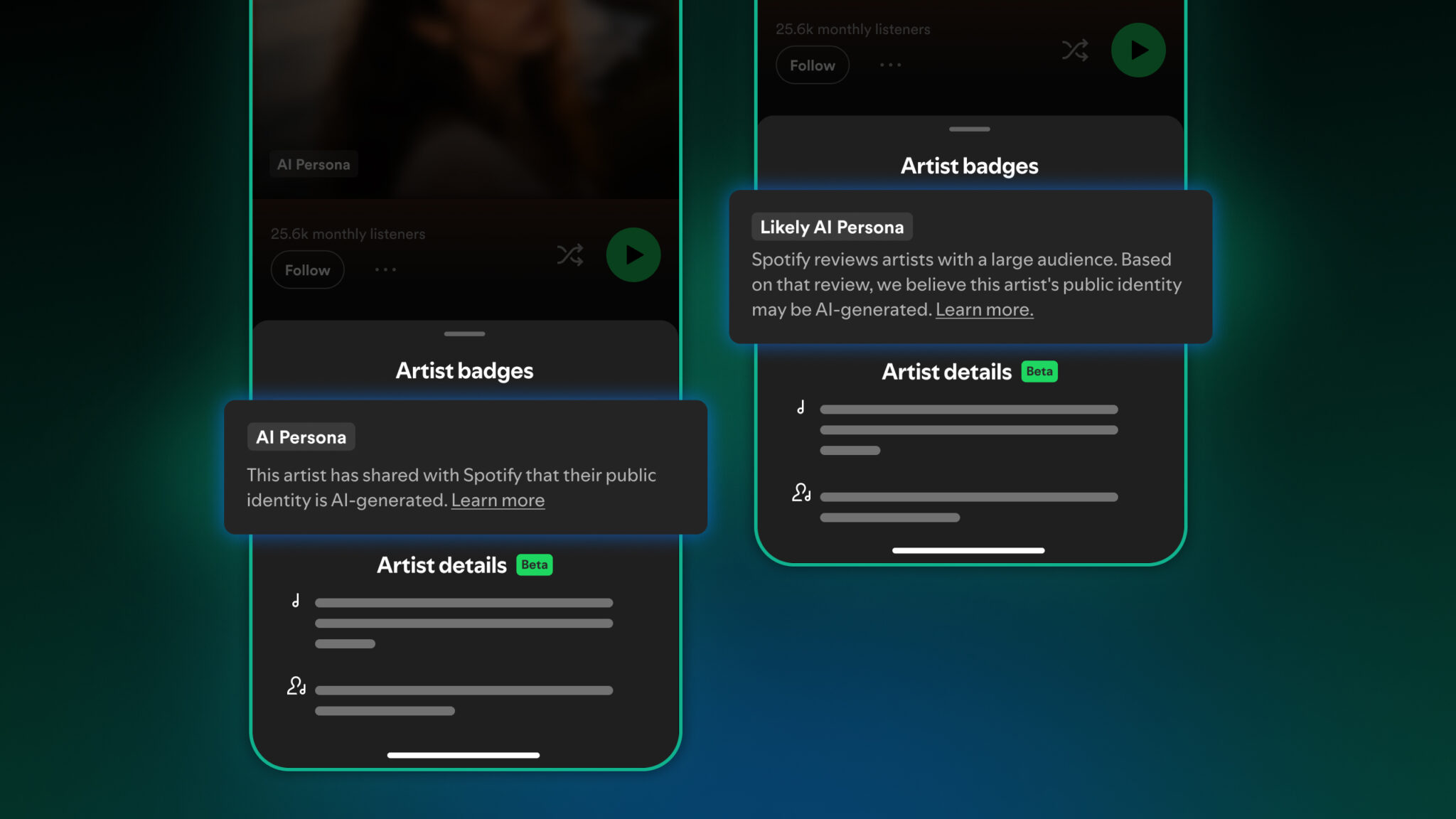
Spotify is introducing a new system designed to identify AI-generated artist identities and prevent them from appearing in algorithmic recommendations unless users actively choose to follow them.
Starting in mid-September, an “AI Persona” badge will begin appearing on selected artist profiles, search results and track listings. The label is intended to make it clear when an artist’s public identity, including their name and profile image, represents a fictional or computer-generated persona rather than a real human musician.
Spotify said the change comes in response to growing concerns from listeners who may believe they are discovering a human artist, only to later discover that the identity behind the profile was entirely AI-generated.
The platform is also changing the way these accounts are handled by its recommendation systems. Artists identified as AI Personas will be excluded by default from editorial and algorithmic playlists. Their music can still appear in a user’s personalized recommendations if that listener has specifically chosen to follow the account.
Creators will be able to voluntarily disclose that their artist identity is synthetic through the Spotify for Artists dashboard. However, Spotify says it will also conduct its own reviews, particularly of highly visible profiles, to identify realistic computer-generated personas that have not been properly disclosed.
If Spotify’s internal team applies the badge to an account, the creator will be notified and given the opportunity to appeal the decision. Later this year, the company also plans to introduce a reporting feature that will allow listeners to flag accounts they believe may be using AI-generated identities.
The move comes as the music industry continues to grapple with the rapid growth of AI-generated music. Platforms such as Suno have made it possible for users to create large volumes of music from simple text prompts, raising concerns about copyright, transparency and the financial impact on human artists.
Spotify’s royalty system also means that streams generated by AI music can affect the amount paid to human musicians, as subscription revenue is distributed according to overall streaming activity.
The potential financial impact is already becoming a major concern. Earlier this year, federal prosecutors charged a North Carolina man accused of using AI-generated tracks and automated streaming bots to fraudulently obtain more than $10 million in royalties.
A recent study conducted by CISAC and PMP Strategy, with participation from French streaming platform Deezer, estimated that AI-generated music could put approximately $4.6 billion in annual artist revenue at risk by 2028.
Spotify’s new policy represents one of the platform’s most significant attempts yet to distinguish human artists from synthetic identities and give listeners greater transparency over who—or what—they are listening to.